
 18:30
18:30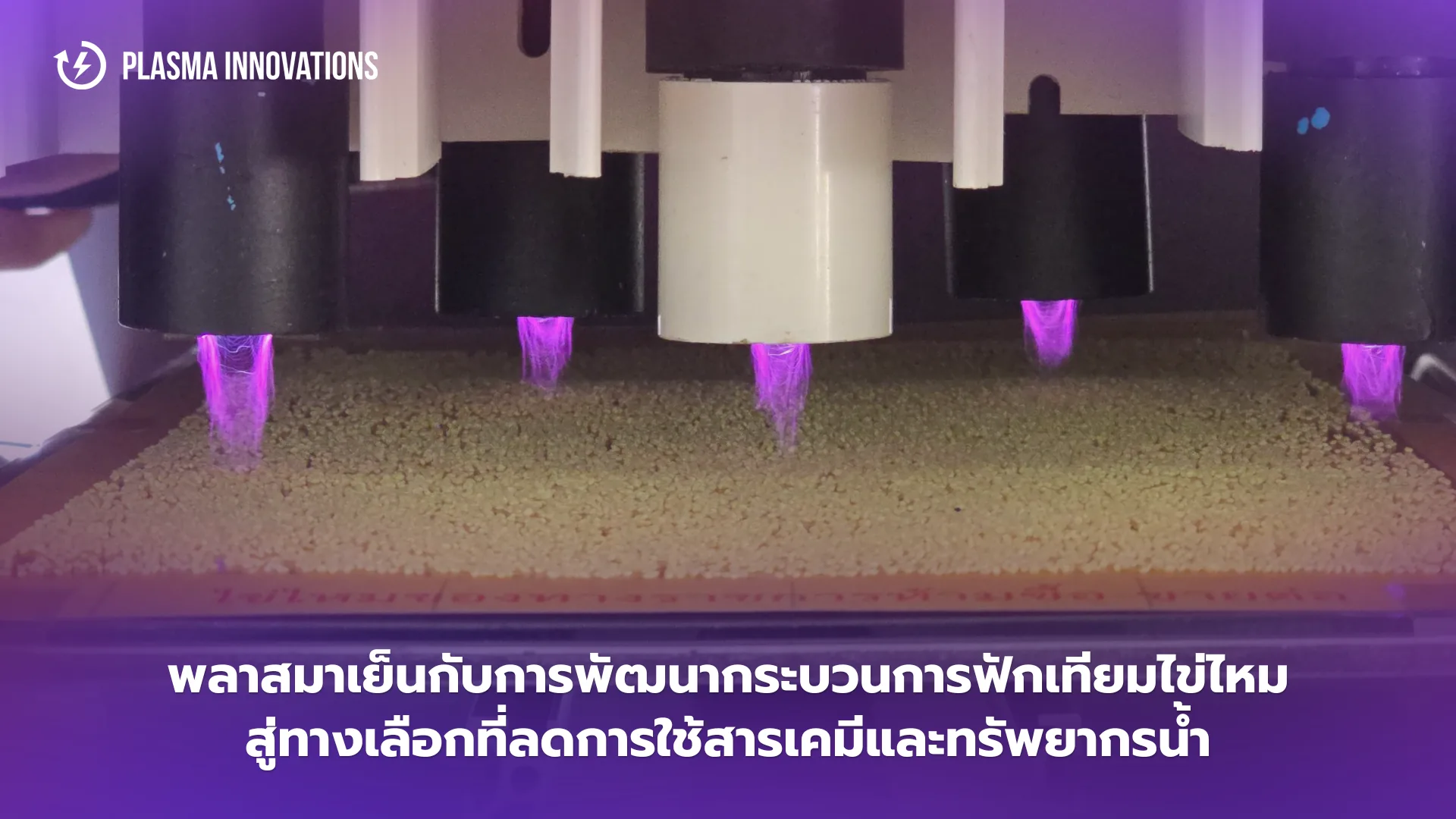
From a challenge in agriculture to technology developed for real-world use
Developing plasma technology does not start with the machine alone. It starts with understanding the user’s problem, the existing process and the results they need. One project at Plasma Innovations that reflects this approach is the application of cold plasma technology to study the artificial hatching of bivoltine silkworm eggs, which hatch twice a year.
The project aims to develop an alternative for the artificial hatching of silkworm eggs, which normally relies on hydrochloric acid to induce hatching. Although this method works, the process needs large volumes of clean water to rinse the acid off the eggs, as well as measures to control exposure to chemicals and fumes and to prevent equipment corrosion.
Cold plasma technology was therefore studied as an approach that could reduce reliance on chemicals, cut water-intensive steps and improve operator safety, while keeping hatching efficiency and egg quality as the top priorities.
Collaboration Between Research and Practice
The research project began in fiscal year 2025 (B.E. 2568) as a collaboration between the Queen Sirikit Department of Sericulture and Assoc. Prof. Dr. Siwaphon Srisonphan of the Department of Electrical Engineering, Faculty of Engineering, Kasetsart University, with funding from the Science, Research and Innovation Promotion Fund through Thailand Science Research and Innovation (TSRI).
The study was carried out jointly at several sites: the Queen Sirikit Sericulture Center in Nakhon Ratchasima, the Queen Sirikit Sericulture Center in Khon Kaen, and the Department of Electrical Engineering, Faculty of Engineering, Kasetsart University. This kept the technology’s development connected to the actual working conditions and needs of the end-user agency.
Developing the Gliding Arc Plasma System
For this project, a Gliding Arc plasma generator was developed to study how to induce hatching in eggs of the J108 × Nang Lai Saraburi silkworm breed, covering both immediate hatching (Sokushin) and hatching after cold storage (Reishin).
The work went beyond building the plasma source. It also included studying the relevant parameters, such as electrical power, exposure time, distance and plasma distribution pattern, to find the conditions best suited to the characteristics of the eggs and the production process.
Early Trial Results
Early-stage results found that the hatching percentage of silkworm eggs treated with cold plasma tended to be close to that of the hydrochloric acid process. However, these results are still at the research and development stage, and further testing is needed to confirm effectiveness, consistency and suitability under real production conditions.
Development is now focused on adapting the plasma machine for operation at the sericulture centers, in terms of machine size, ease of use, process control and the capacity to handle suitable volumes of silkworm eggs.
 Back to Case Libraries